



Based on some of the comments on my last two pieces: Is Breastfeeding Hard? Or Are All the Odds Just Stacked Against You? and: You Can’t Clean Up Infant Formula, it’s clear there is A LOT of misinformation out there about artificial milks and their immediate and long-term effects on the health of the baby and the mother.
One question that has come up repeatedly is: how, exactly, are artificial milks risky? It’s an important question and the answer is not one you will come across readily since our culture has so deeply normalized artificial feeding for several generations now.
Before getting to the health effects of artificial feeding — which are myriad — I think it’s helpful to understand the ways in which it has become so normalized in our culture because this works to hide the true risks.
As an example, take a look at this statement from The New York Times Wirecutter article on their top picks for infant formula: “we learned that all FDA-approved formulas made for healthy, full-term infants are safe and nutritionally adequate for normal growth and development from birth through the first year.”
This is a patently false statement because for one, no one can guarantee that a packaged infant formula product is “safe.” Contamination can and does occur all along the production chain as was the case in 2022 when Abbott recalled formulas due to potential Cronobacter and Salmonella contamination and two infants died. And in 2024 Reckitt/Mead recalled certain batches of formula due to potential Cronobacter contamination as well. Furthermore, Consumer Reports tested 41 types of infant formulas and found that at least half of the samples had concerning levels of contaminants like lead, arsenic, bisphenol-A (BPA), and “forever chemicals” PFAS.
Second, the claim that formulas are “nutritionally adequate” is also false. Infant formulas by law, must meet basic requirements for 30 essential nutrients, but the suggestion that infants are getting all that they need in those first few years of life from an artificial product is dishonest at best. For a quick snapshot of the differences between formula and breast milk please look at the list I complied in my earlier piece that details some of the known components and actions of breast milk, which are not present in artificial milks and have profound effects on health.
Next, consider what The New York Times columnist Michelle Goldberg had to say in her column last year:
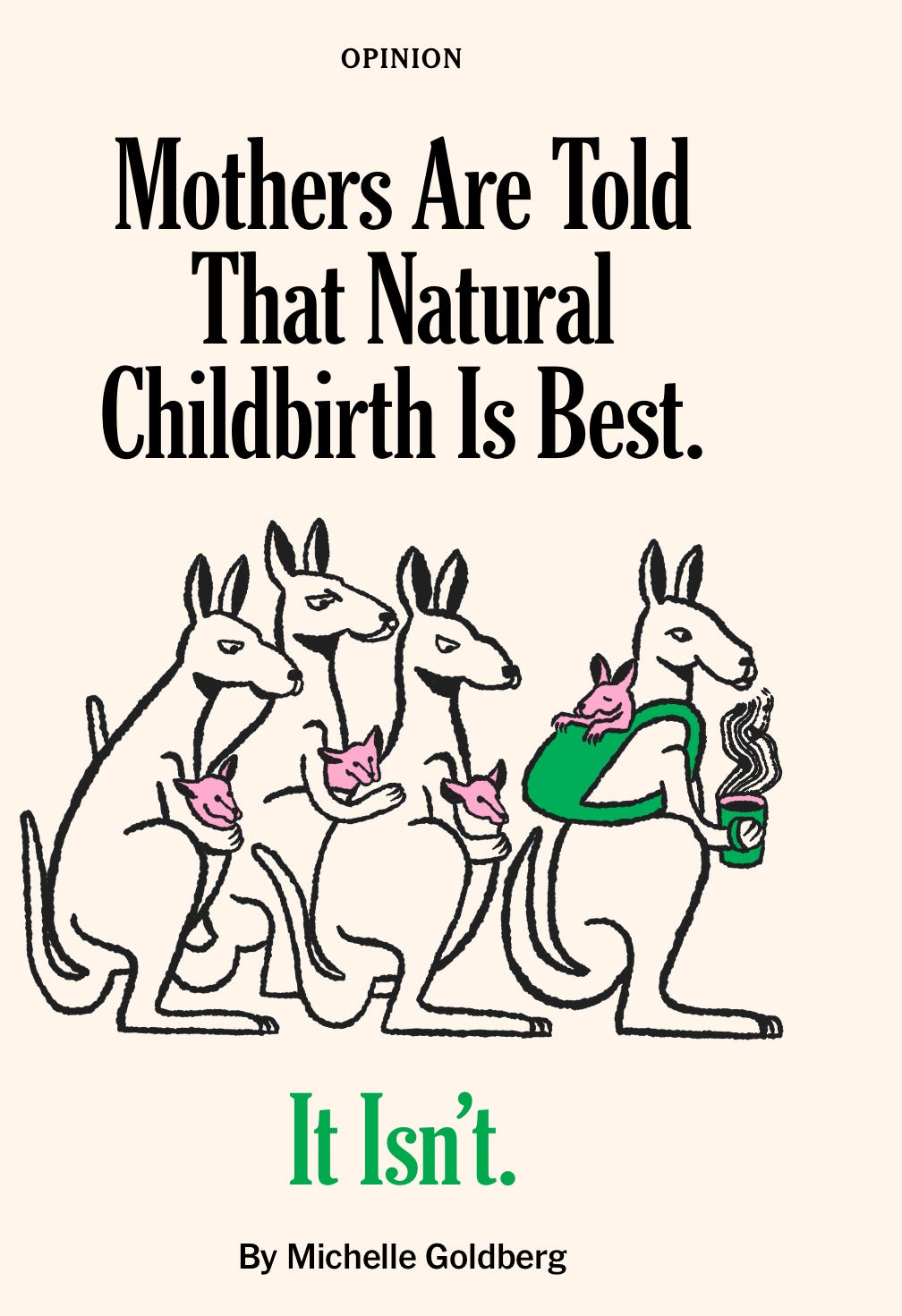
“Ironically, while there’s little evidence showing that breastfeeding is particularly important for babies, there’s quite a bit showing that maternal happiness is.”
It’s hard to believe that the editors at The New York Times did not fact check this statement — it is a prime example of how some women in powerful positions who are influencing cultural norms show complete disregard for human biology and mammalian evolution. I think this can be attributed to two main causes: one, the scientific indifference for mothers, babies, and the importance of breastfeeding; and two, the continuing pressure of male dominance has made it so that women in positions of power feel it is necessary to disconnect from their unique female biological functions. Or as author and researcher Gabrielle Palmer puts it:
Because of [male] dominance, most human societies end up being organized by and for men and many particularly female abilities do not earn prestige or rewards. The fact that a woman in power must hide female qualities like lactation, is a measure of continuing male dominance.
Another prominent cultural influencer is Jessica Grose, The New York Times opinion writer who often covers parenting and family topics. In her 2022 book, Screaming on the Inside, she writes that when it comes to breastfeeding, the gains to the child are “small and poorly understood compared with the cost to the mother, which may be substantial.” Again, this is false, the gains to the child are anything but “small” (see below) and it’s wildly irresponsible when she and others in their positions of cultural power and influence dismiss mammalian lactation in this way.
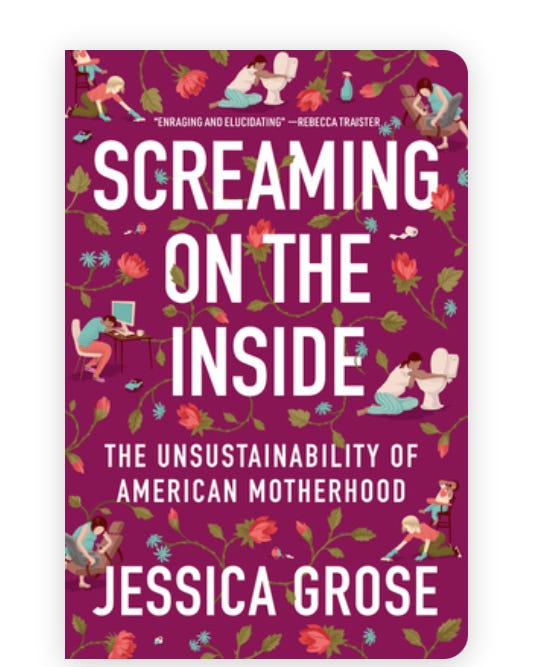
In her book, Grose describes how she struggled with breastfeeding and stopped doing so after two weeks. I don’t blame Grose, or any other woman for not being able to successfully breastfeed in a culture with little to no social support, generations of misinformation, and intensive marketing from infant formula manufacturers; however, I wish Grose would have emphasized these barriers to successful breastfeeding rather than outright dismiss it.
Where I do blame Grose though, is when she writes, “I have read all the studies…and I know that formula is perfectly adequate nutrition for babies… I also know that when you look at long-term outcomes…the difference between breastfed and formula-fed children is minimal.” First, it’s just not possible that she has read “all the studies” on breastfeeding and could then come to such a conclusion. Second, the idea that reviewing conclusions of scientific studies completed in the past fifty years or so could possibly counter the primordial wisdom of 200 million years of mammalian evolutionary biology is quite a leap that unfortunately is now commonly accepted.
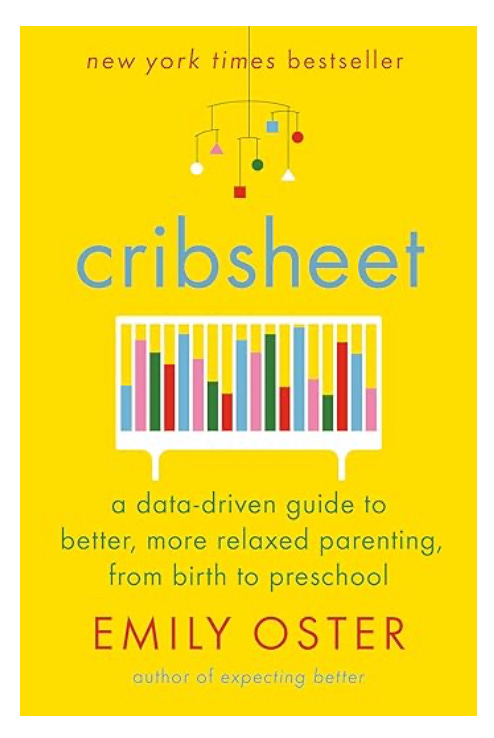
And perhaps the most famous influencer of all in this regard is economist and author Emily Oster who is notorious for her strict readings of “the data” and comes to the following conclusion in her book Cribsheet, “The data do not provide strong evidence for long-term health or cognitive benefits of breastfeeding your child.” Here’s what Bruce German, professor of food science and technology at UC Davis, who has been studying breastmilk for 25 years said about Oster: “Emily’s perspective is the legacy of decades of indifference to breastfeeding from the scientific community, clever study designs and aggressive marketing by the infant formula industry and the staggering lack of social support at every level for the basic concept of breastfeeding and nourishing infants.”
I’m sure all of these women would consider themselves feminists, however, when they disregard the importance of breastfeeding and mothering in general, they are only furthering male supremacy. A true feminist message would recognize the deep importance of keeping mothers and babies close, thereby enabling them to successfully breastfeed which has vast implications for life-long health.
Instead infant formula manufacturers and the culture at large have seized upon the idea that artificial milks are liberatory for women who may choose not to breastfeed. None of this would be imaginable if it weren’t for the normalization of artificial feeding and a cultural milieu that prioritizes work outside of the home, technological advancements, and a dismissal of our mammalian nature. Much of this turning away from biology is the legacy of second wave feminism, which prioritized a woman’s right to work outside of the home — a tactical error with the tragic consequence of separating mothers and babies.
Indeed, nearly all modern parenting books advise parents to separate babies from mothers almost immediately after birth by placing them in separate sleeping spaces. And most pediatricians will warn of severe consequences of sleeping with your baby. The imperative is to separate babies from their mothers immediately and get the baby to sleep on a standard adult schedule that allows for a swift return to a typical nine-to-five workday.
Crucially, separation causes breastfeeding to falter, and this is where those same so-called parenting experts will tell mothers that it is perfectly fine to supplement with artificial milk. But once these substitutions begin, the composition of the baby’s microbiota is immediately compromised, and the mother’s body is often not able to produce the amount of milk the baby needs. Thus begins a cycle of dependency on artificial milk manufacturers — and Western medicine. Undermining a woman’s ability to feed her baby with her own body has deep and wide-ranging consequences for her autonomy and her entire family’s health.
Undermining a woman’s ability to feed her baby with her own body has deep and wide-ranging consequences for her autonomy and her entire family’s health.
In our time, infant formula is presented as a technology of liberation from biology, but it is actually a technology of disease in the Western world and death in the least developed regions of the world. In fact, the reasons why the use of artificial milk does not cause rampant death in the Western world is because of the availability of clean water and antibiotics. In 1981 alone, Nestle’s aggressive marketing of formula to mothers in poor countries resulted in the deaths of 66,000 babies, and though it’s not often reported, 25,000 babies a year still die after drinking formula mixed with contaminated water.
In the Western world, babies who are formula fed are at much greater risk for infection and other disease: infants who are artificially fed are 50 percent more likely to develop ear infections, 17 times more likely to have pneumonia, and twice as likely to get diarrheal disease; they also have elevated risks of childhood obesity, type 1 and type 2 diabetes, leukemia, and sudden infant death syndrome (SIDS).
Formula feeding also increases the risk of antibiotic prescriptions in children. One study of 40,258 five month old babies found that compared to fully breastfed babies, those who were fed breast milk and formula received 106 more antibiotic prescriptions per 1000 children and those fed strictly formula received 138 excess prescriptions per 1000 children. The authors note that although it is known that formula feeding is associated with increased morbidity and mortality even in Western cultures, “Information on formula are seldom unbiased; thus, public perception of risks is distorted.”
Antibiotic use disrupts the gut microbiota by changing bacterial populations which is particularly consequential in infancy; one study found that exposure to antibiotics before the age of five is associated with increased risk of Crohn’s disease later in life. And that’s just one example; recent science on the baby’s microbiota has shown that the wrong bacterial species in a baby’s gut is catastrophic for health. Without the correct bacterial species, which can only be fed by the sugars in breastmilk, the baby cannot develop a robust and healthy immune system. Indeed, whether or not one was breastfed, the quality of that milk, the transference of protective bacteria (or not), and the duration of breastfeeding are the key determinants of long-term health. As immunologist Lars Hanson puts it: not being breastfed is a state of immunodeficiency.
As immunologist Lars Hanson puts it: not being breastfed is a state of immunodeficiency.
In an upcoming post I will detail what is now known about one particular strain of bacteria and its vital importance for the health of babies, both immediately and long-term. For a teaser see the article I wrote for The New York Times in 2018 and take a look at Chapter Five of my first book, Formerly Known As Food.
Furthermore, the process of breastfeeding over the course of years — the suckling, tongue movements, and chewing motions — affects the shape of the palate, teeth, facial structure, and nasal passageways. Bottle feeding does not create optimal facial structure or the wide-open nasal cavities that are necessary for proper breathing. The results are malocclusions requiring extensive dental and orthodontics work, chronic congestion, snoring, and sleep apnea, eventually leading to a host of chronic ailments like diabetes, hypertension, and cognitive decline.
This is all just the tip of iceberg when it comes to the long-term effects of not breastfeeding and it doesn’t even get into the risks for mothers. Just as the baby is designed to drink breastmilk, a mother’s body is designed to breastfeed. Not breastfeeding after the birth of a baby is a disruption to her biology. This disruption explains the increased risks for both breast and ovarian cancer, as well as increased risk for obesity, type 2 diabetes, metabolic syndrome, and cardiovascular disease.
Ultimately I find it somewhat depressing that I (and many others) have to work so hard to convince people that breastfeeding and keeping babies and mothers closely connected in those early years is critical for both immediate and long-term health. As professor Carolyn Campbell puts it, “The discussion of whether or not breastmilk is the ideal infant food is like asking whether or not the kidneys are the ideal means to eliminate wastes from the body and suggesting that dialysis machines ought to replace human kidneys.”
When cultural influencers like Goldberg, Grose, and Oster devalue and dismiss the importance of breastfeeding they are harming mothers and babies and only further serving male supremacy. Infant formula is risky and any other messaging deserves to be called out for what it is: obfuscation of a biological truth.
What I have learned in my current project of curating research about breast health from across disciplines is truly eye-opening. Lactation is a critical component in creating an environment where breasts can remain healthy tissue throughout the lifetime. Without it, there is an increased risk of breast cancer. Lactation closes a loop in the development and health of the breast that is opened by a pregnancy. Without lactation for at least 6 months exclusively and then ending gradually, the body overreacts to its ending, creating a highly-inflammatory environment within the breasts. We have known for a long time that for people who do not ever experience pregnancy, there is a higher risk of breast cancer because their breasts did not ever have the opportunity to completely develop; full breast development only occurs during pregnancy, and mostly in the first trimester. However, if a person does experience pregnancy, gives birth, and never breastfeeds, they have an even higher risk of certain types of breast cancer than if they had never become pregnant at all.
All of this is to say that there are realities we don't like to talk about when it comes to pregnancy, motherhood, and health. You have detailed the formula risks very well here, and when we one day begin to really look at the outcomes of how our culture is feeding babies today, we will see exactly where we went off track. Failing to support motherhood, and by extension, failing to support breastfeeding, is an enormous mistake that society will regret. Instead of understanding and dismantling the many, many barriers we have erected in the way of breastfeeding, we have normalized the concept that breastfeeding is "too hard" and that formula feeding "is basically the same." These are dangerous myths.
I absolutely agree with everything you say, with one caveat… our household is what would be considered “patriarchal” however, my husband has determined it to be his mission to provide for our family in such a way that I can nurture our little ones without the need to work an outside job. Our most recent birth did not quite go as planned and he was a literal rock for me, and willing to shift and change what we had previously “planned” to do what is best for our baby as he grows. I believe that real true men actually are willing to do the work to learn and grow, and as they learn they do better.